Wednesday, 5 October 2016


System Leadership Development
Thursday 6 October 2016
Southern Cross Vocational College


Design for Learning: Space, Technology and Learning
Greg Swanson

Learning Intentions:
  • To understand the connection between space and Authentic Learning 
  • To develop system-wide terminology to support that understanding 
  • To critique the model to enhance its effectiveness as a system resource  


Primordial Metaphors:

                   Camp fires                                          Water holes                                         Caves

Screen Shot 2016-07-27 at 3.04.28 PM.png


Leading Agile Learning

Cathy Young- Our Lady of the Assumption (Principal)

How pedagogy influences the design principles for contemporary learning spaces:
  • Catholic
  • student centred
  • embracing the community
  • inspiring
  • holistic learning
  • safe
Frances Stewart - St Columba's North Leichhardt (Principal)

John Finneran - Newman College, Perth (Principal)
  • Faith and Learning (dual moral purpose)
  • vision for learning
  • Educational brief
Steve Gough - All Saints Catholic College, Liverpool


The importance of exploring spatial literacy in the recruitment process.
New Learning Environments
Emma Marshall


Tuesday, 2 August 2016

LEAP CONFERENCE part 4

LEAP Conference 2016
Sydney Masonic Centre
Creating and sustaining effective PLCs in your school

Developing inquiry and sustained learning communities
Julie halbert and Linda Kaser
"Spirals of Inquiry" 2014 with Helen Timperly 

Sitting is the new smoking - make sure you move around! Sitting for more than 20 minutes or longer - can shorten your life!
There is "magic" in collaboration.
What does it take to develop and sustain inquiry learning communities?

How can we use the "pull" of curiosity as opposed to the push of policy
How can we use the notion of hard goals to collaborate?
Can evidence informed inquiry process help us to achieve our goals?
What action can you take immediately?

PULL of curiosity " professional curiosity is important because..." The hungry mind - Susan Ingle
Teachers who smile at kids had kids that are more curiosity! It causes a PULL
Teachers who talk about their own passions, that motivated children to ask more questions.
Value the question... Encouraging curiosity is important.
Give and Go - Why is intellectual curiosity a good thing? It's important because it... Broadens our horizons...opens up the world....
How do we create conditions for ADULT CURIOSITY so that we can reach high. High quality and high equity for all learners.
Funding levels in Aust seem generous compared to other countries- take advantage of this
Quality of conversation and focus is so important.
HARD goals are important H- eartfelt, A- inmates, R-equired, D-ifficult
These are way more motivating than smart goals- they are gutsy!
Every learner crosses the stage - moving from school to life with dignity,purpose and options.
What motivates you and the staff you work with?
All learners leaving our schools with more curiosity than when they arrive
Are we creating the learning environments that a not only maintain curiosity but encourage more curiosity 
All learners with an understanding of and respect for an indigenous worldview.
Mindset- CAROL DWECK - underpins all the work that we do. 
teachers are not motivated by goal setting of the politicians- 
If you design a half hour session (2-3 top ups throughout the year) on growth mindset- that can really help young people survive education.
Principals lead Growth mindset classes within their school. 
YET is so powerful- "you haven't learnt that skill YET,"
Needs to be supported effectively- but mindset and hard goals work when placed together to challenge the assumptions about how kids learn.
We can learn how to interrupt the fixed mindsets for our students and staff.

WHY INQUIRY.
WHY NOW?

New Zealand - big investments and big improvements- then program was cancelled. What was the impact?
Expert facilitators were utilised and staff sustained the new strategies even without the funding. The staff who were continuing to inquire and further develop their skills and strategies  were making even greater impact on students learning.

Effective systems: commonalities-
Inquiry based
Collaborative
Coherent
Professionally  led
Takes place over time.

Spirals of inquiry are spreading. (Refugee camp in Kenya supported by spirals of inquiry)
what s going on for our learners?
How do we know?
Why does this matter?


LEAP CONFERENCE 3

LEAP Conference 2016
Sydney Masonic Centre
Creating and sustaining effective PLCs in your school


PLCs NSW DET- principals are grouped purposefully by leaders
How do we as school leaders, open the eyes of our political leaders to the real PLCs that are required in schools.
 Teachers need to have a voice and pursue them as a professional group.
We have to show that we make a difference  and "shout out" our success - proving to politicians that we are capable of shaping education policy.
How are we represented? We are divided in many ways 62 principal associations. Start saying that we are accountable to make a difference
Teacher associations have been established to defend the industrial relations of schools - where are the representatives who lobby the professional practice.

Theory and practice: how do we remain organic in developing PLCs but also remain focused on whole school goals - fine balance what does it look like in schools?
Standardisation and reforms have not delivered the results the accountability can be run into the ground.
As a profession is to balance the prescription with the laize fare approach.
Plc can be used as school improvement- starting with a structure, process to be followed, on an understanding that it can be flexible and adaptive to the improvement on students learning.
The miso level- rich network of partnership and connections. Not top down, bottom up or middle.

How do standards work within prof dev?
Managing people, building capacity - research tells us that teachers don't resist support - but schools have not supported processes that actually mobilise staff to feel safe to take chances in their practice to test if they can help make a difference to their students.
What's behind the resistance- usually it is fear- how do we chunk it so staff feel supported to succeed.
John Hattie says that he finds that expert teachers do not want to be "disrupted" how do we encourage expertise to be shared? How are they privileged?

How do we onboard new graduates?
More collaborative, they are used to work in and learning from each other.
The lead teachers are energised with new graduates.
Teacher PL needs to be differentiated.

Teachers are the best critique's.. If you are not asking questions, co- planning, co- teach, critique - that is PLCs. We need to change from we can run our school and teach as we wish, to we have a right to collaborate and measure our impact.
Collective therapy that we trust and can challenge us and differ from our opinion - the hard edge is essential 

Parent engagement- how do they feel about innovation and change in schools?
Sense of desperation from parents- something is wrong with my child but the school is not helping
Maybe it's time to reeducate parents on learning- they do not know what we are as a profession - how do we help parents know what learning looks like?

LEAP CONFERENCE part 2

LEAP Conference 2016
Sydney Masonic Centre
Creating and sustaining effective PLCs in your school

Thinking differently: Professional Learning Communities
- Prof. Alma Harris, Assoc. Prof Michelle Jones
PLCSs in action - (Harris and jones 2011)
We need to focus on the right things
PLCs when effective absolutely make a difference
Teachers cannot just self combust into PLCs - a model and MO needs to be utilised and understood by participants. Norms/ guidance assist effectiveness.
Time to think differently.- PLCs have been "done" change for change sake--- but we need to take time and NOT change policies quickly.
Organisation learning
Individual learning
Students learning is paramount.
How do PLCs have impact how will we know?
IMPACT comes first - " if I do this, what difference is it going to make to students?"
What does this mean for my school? - how do I support the operational side?
Authentic Change?
PL today is ineffective, it neither changes teacher practice nor improves student learning - so what does?
Effective PL focuses on student learning
Concentrate on the pedagogical behaviours and practices of teachers
Enable teachers to enquirer into practice in order to improve practice.
HOW? prof collaboration is increasingly being viewed as a powerful strategy for improving students learning- John Hattie 2009
The most effective teachers and leaders commit to their own learning first and then support the pl of others. ( connect to learn: Learn to connect Harris and jones)
OECD 2016- 
teachers need time to develop discuss absorb and practice new knowledge.
Activities need to be sustained and intensive rather than sporadic.
The outcome must be - students learning improvement- that's it!
Teachers working together nicely and learning is a PROCESS- not the outcome

PLCs - the confusion 
Whole school - difficult to really evidence the impact
School Teams- must get this model and collaboration effective within the school first.
School networks- very effective , but only when school teams are working effectively!

What if your staff do not want to collaborate? 
Start with the staff that want to work in a PLC - you will never get 100%, but when you have a good core, schools can make a difference. 

Non negotiable a for PLCs
start with evidence - data
Teacher learning connects and impacts on students learning
PLC teams engage in 'disciplined collaborative enquiry'
Distributed leadership is enacted in PLCs
Commitment, collaboration 
Capabilities


Y

COLLABORATION 

What does it look like?
Engagement, purposeful, data, together, 
What does it sound like?
Respectful, honest, feedback, professional stem net not personal statement, everyone gets a say, 
What does it feel like?
Trust, valued, positive, supported, safe, challenged, responsible, energised, liberated

HOW?
 Ground rules, shared beliefs, taking the focus off the teaching and make the focus students learning. It's not about the teacher "fault" but the students gain/ improvement.
Where do you want the student learning to be at the end? How can we tap into the collective capabilities of the members of the team?

What do PLCs do?
Where do you start?
Who 'owns the PLC.
What is a good focus of enquiry?
How do you measure impact? This comes at the beginning and comes agin at the end?

Question of enquiry
Start with data-  What are we doing very well. - how do we share it?
What do you need to improve? 

Begin with the end in mind.

What does it look like?
Structures, roles, teams, collaborative ways of working.
Building leadership capacity- skills or teams first? Both? 
Avoid story swapping, sharing practice, more powerful to move towards research teams

Innovation and change 
Trailing and feedback ( what action does it mean for the group?) what worked what didn't work what was confusing what was clear?

LEAP CONFERENCE- Wednesday 3 August 2016

LEAP Conference 2016
Sydney Masonic Centre
Creating and sustaining effective PLCs in your school

Chairperson: Maxine Mckew

"Class Act" case study of 6 Australian schools.
We learn from each other - benefits start to flow when we spread knowledge about effective practice - leading to confident students.
What we think we know - may not always work- we need a temperament to be adaptive, open to improve and change.

Professor John Hattie - Chair of AITSL

Professional Learning Communities - caution- they have been around for a little while.. Govt have taken on and realised that educators are doing this naturally- but it can be taken over and abused
We have an opportunity to be clear of the specifics.
Identify the teachers who are growing students and inviting other staff to learn from them.
Communities listen to YOU - talk it up and reeducate your community to know that your hard work is making a difference.
Avoid the politics of distraction they don't make a difference
Labelling children has a - .61 negative as soon as a students is identified teachers have an "excuse" for the lack of growth in the year.
Technology is not impacting on students growth.
Argument is that I'd "teachers see learning through the eyes of the student and when students themselves as their own teachers.
When we run PLCs - stop looking at another app- ask for evidence of impact on student growth.
How do we scale up great impact
Study success - why is that teacher having an impact, how do teachers learn from these amazing practisers- what are they doing that is making a difference.
Privilege teachers with the opportunity to ask for help in a particular area.
Five year olds are wondErful teachers, by the time they are eight they know that they need to attended school to "watch" the teacher work.
Teachers working together as evaluator of impact is the biggest difference to students to learning.
Explicit success criteria
Errors and trust are are welcomed as opportunities to learn
Maximise feedback
Right proportion of surface to deep lessons
The goldilocks principles of challenge/ deliberate practice- not too high not too low - the balance right.
What makes a difference?
Bring along a piece of work and compare are it to a sample 3 months later... What has changed? Why/ why not?
How do we move the debate from how we like to teach to what makes impact?
I collaborate- judgements of teachers in a school 

Success and privilege them
See success in schools like theirs
Persuaded credible and trustworthy persuaders
Affective stays feelings of excitement and satisfaction
Subjective norms- beliefs that in this school we cause learning

Teacher, curricula, teaching,student, school, home.
What can we do to help you. Wouldn't it be nice and recognise our existence, recognise our work, recognise our impact.
Teacher expertise, school leader expertise, teacher education expertise, professional learning expertise.
Teacher educators - Put the evidence on the table that your graduates can make an impact on student learning.
Number 1 influence on student learning - collective teacher efficacy!

TEACHER EFFICACY

belief of ones own ability to promote positive change for students
High expectations are essential
Collective efficacy - belief of teachers about collective ability to promote successful student outcomes within their school.
It relates to: 
Evaluating current practice
Seeing impact as function of teaching
High expectations
Decreasing disruptive behaviour 
Educating parents 
Responsive to leaderships 
Monitoring impact
Helping teams get and interpret feedback

COPLAN
CO-EVALUATE
CO-ANALYSE
CO-REFLECT

We learn more when we ask students to identify their own learning needs.

KNOW THY IMPACT!
evaluation capacity building - SO WHAT IS THE IMPACT?
Progress to achievement- 
NAPLAN - intriguing you are not working to make a difference to scores - your job is to make a years growth for a years education!


Monday, 1 August 2016

Implementing Creative Arts and student choice within the Religious Education Classroom.


Self Reflection, Classroom Observation and Feedback
Thursday 24 March 2016


Integrating Creative Arts and the Religious Education curriculum is an effective tool to assist students to gain greater understanding of our Sacred stories and for students to exercise their creative talents to express their understanding of Scripture. 

Educators often find it difficult to create opportunities for students to "inquire" and express their own "voice" to their learning. This REC asked for feedback on the effectiveness in integrating these two strategies, student voice and dramatic devices. 

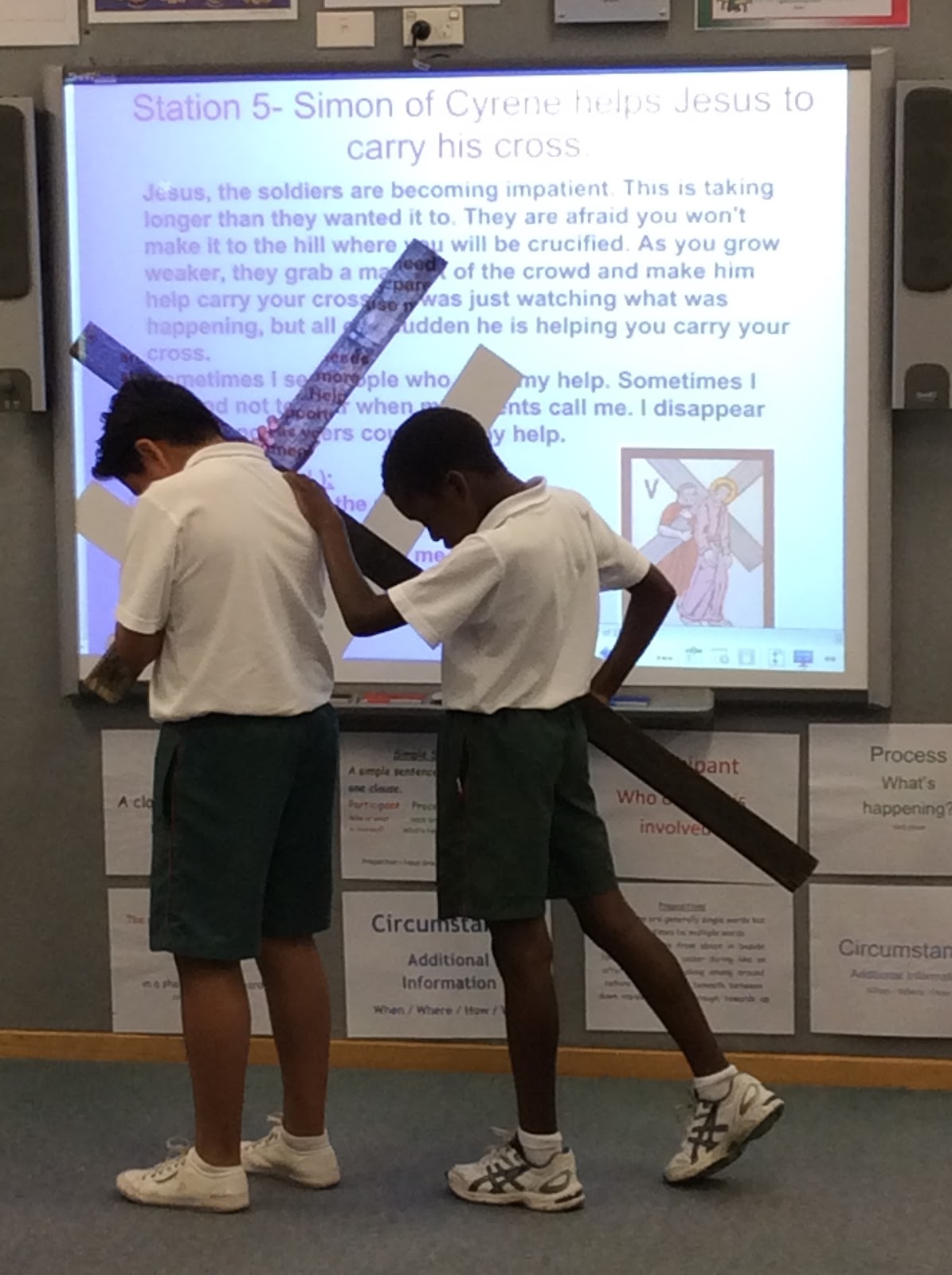
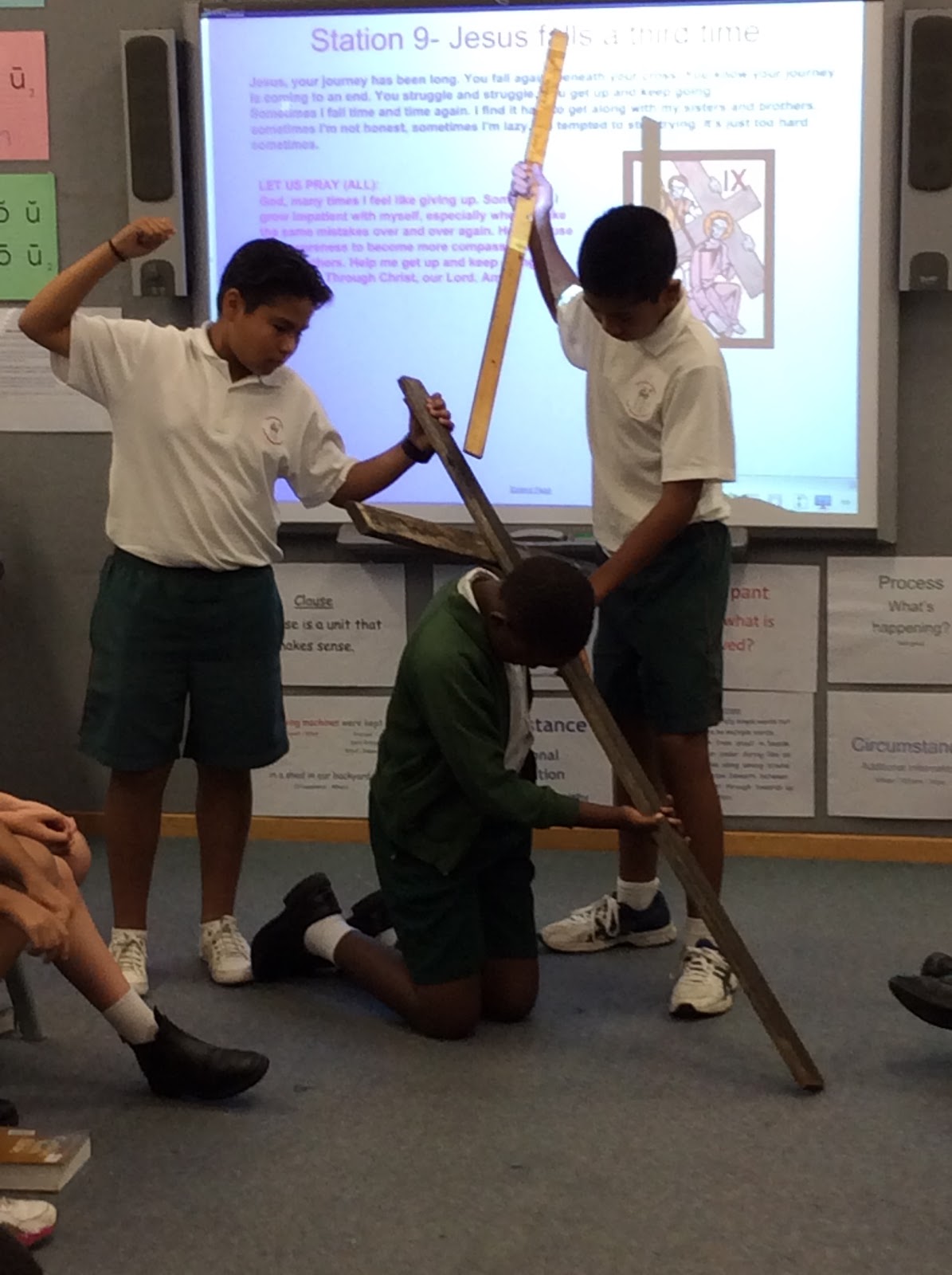
 This lesson utilised dramatic devices of "freeze frame" to reflect the Stations of the Cross. The "statues" created by the students were effective, moving and reverent and truly expressed the mood, tone and understanding of this most sacred form of prayer. 

Engaging in this self Reflection process has been beneficial for the REC and has assisted their leadership skills to implement a similar process within their own school context, to lead beginning teachers in reflecting on their own practice, particularly when teaching RE.


Reflection Process

Utilising Vocabulary Strategies within the RE Classroom


Self Reflection, Classroom Observation and Feedback
Tuesday 22 March 2016


Religious Education teachers work very hard to provide students the opportunities to access their faith traditions and beliefs from our Sacred Texts. the challenge that teachers face is assisting students to really comprehend the teachings of Scripture when students themselves are unable to recognise the complex language that is used within the bible stories. 

Through this Self Reflection Process, the REC asked me to provide feedback on her lesson that was specifically designed to unpack identified tier three words from Scripture for 8 year old students to understand and apply in their work. The identified words included "crucifix, sentenced, tomb" 
Throughout this lesson, the REC gave students the opportunity to access their prior knowledge of the Holy week and Easter stories by providing images that the students recognised. Using a barrier game, it was evident hat students had difficulty describing the image as they did not have an understanding of the particular tier 3 vocabulary. E.g One student described the tomb as " a big cave"

The REC then helped the students identify and explicitly teach the new vocabulary. Giving students a further opportunity to practice this new vocabulary using a Adobe Voice app on the ipad, it was evident that students had increased their knowledge and understanding of the Scripture passage and of their religious literacy. 

The REC had clear goals for further implementation of vocabulary strategies in RE , particularly as part of a shared reading session using Scripture.


Providing Student Choice in RE lessons


Self Reflection, Observation and Feedback Model - 
Friday 18 March 2016


Strategic Priority:

1.4 Nurture and deepen students’ knowledge and understanding of the Catholic Tradition.
i. Quality pedagogical practices in the teaching of Religious Education (K-12) are
strengthened.
- Create opportunities for RECs to model, observe, give and receive feedback

and engage in collegial discussion focused on authentic teaching and learning of
Religious Education.

Engaged in a Self Reflection, Classroom observation and Feedback process today to build RECs capacity to provide differentiated DEEP thinking strategies within the Religious Education Curriculum. 
It is the hope of the REC to engage in  a classroom observation strategy and be given feedback from me to further assist them in developing / improving their personal skills. Engaging in this process will  also assist the REC to develop their own reflection model that they can utilise to build capacity of RE classroom beginning teachers within their own school context.

Reflection Process

Wednesday, 13 July 2016

Capacity Building - Dr Michael Bezzina


System Leadership Development - Capacity Building

"Actions that lead to an increase in the collective power of a group to improve students achievement." 

Dr Michael Bezzina
Mr Greg Thornton

Linda Burney - Inaugural speech in 2003 - A place of many stories

  • Challenge the 'rhetoric' 
  • What does "collaboration" really mean? Is there a sheared understanding of certain terms?
  • Deep Learning, sustaining learning
  • System leadership is challenging- there will be tension- we have the opportunities to work within this tension and gain coherence in our work.

LoLs are in a unique experienece to engage and bring coherence within and across schools. How do we share knowledge across schools and cross "pollinate" 

  • From expert to sense-maker

One might ask what it is that we offer people as system leaders if we do not bring certainty. Once we cease being the “imported expert” we need to offer instead a sophisticated set of skills in stimulating discussion, challenging thinking and synthesising group perspectives -and perhaps a sense of being a leader as learner, someone open and curious - as together groups work to make sense of their purpose and the way they pursue it.

REFLECTION POINT: What skills can I offer as a facilitator of sense making? How can I be “leader” in sense making?
  • From builder to pollinator
In an emergence paradigm, we need to come to understand our work with individual schools and teams not as a series of “one-off” encounters in which we follow pre-determined blueprints to produce pre-determined outcomes, but as opportunities in which schools and teams are assisted to nurture their own capacity, and to give expression to our wider moral purpose in context. Moreover, each of us, as a system leader, is called to share the emerging wisdom from these encounters as we move across the system, “noticing and amplifying” - taking the pollen of good ideas and innovative and effective practice from school to school, team to team, school to team in order to nurture growth and capacity wherever we go, while recognising that we too grow through the experience. We are the only people in the system with the capacity to do this intentionally and regularly.

REFLECTION POINT: What are my strategies for “noticing” and “amplifying”?
  • From map to compass
In traditional bureaucracies we rely on detailed plans, usually issued from on high, to maintain direction - road maps if you like, with each waypoint plotted. Our roles in these systems tend to be to receive the map and to steer schools and teams along the predetermined roadways. In creative, adaptive systems much more attention is devoted to the compass-bearing (the moral purpose). Our roles become focussed on assisting people to appreciate and give expression to that moral purpose and to determine which are the best roads to take in any given context - recognising that the multitude of schools and teams, while headed in the same direction, will likely be journeying on different roads to get there.

REFLECTION POINT: How can I enrich my understanding of our system moral purpose to be able to assist schools in its pursuit?
  • From giving directions to making spaces.
Recognising that we are working for consistency of purpose rather than uniformity of practice, we need to find ways of making the space in which people can engage with the big questions, what they mean in each context, and how they are to engage with them in their particular community. Telling people what to do - and how - is a simple (and relatively quick) response. We know, though, that this does not engender capacity in the system, nor does it build ownership. The challenge for us is to find or create “spaces” - not just the right rooms but more importantly (and in increasing order of challenge!) the right sharing technologies, sufficient time, and a climate of openness, ownership and engagement.

REFLECTION POINT: What is one part of my work which might particularly benefit from my making “space”?
  • From outsider to participant
Whatever our role, we cannot hope to make space, to help colleagues in making sense, to act as a moral compass, to gather the pollen of good thinking and practice, if we are dispassionate and detached outsiders to the work of schools and teams. Leaders in an emergence paradigm need to be prepared to roll up their sleeves and be a part of the learning journey, sharing the questions and the uncertainties, whether it is with a grade team in a primary school, a whole secondary staff, a cluster of schools, a regional principals’ group, colleagues across the system in literacy work, the senior staff of SCS or indeed the SCS Leadership team.

REFLECTION POINT: Compare the outcomes of projects in which you have been more directly engaged with those in which you have been an outsider. To what extent does this experience bear out this shift?
  • From cog to community member
In the traditional bureaucratic paradigm, each member is seen as a cog, with a circumscribed motion and a limited number of other cogs with which to interact. Cogs do what they are designed for - no more, no less. No cog can influence the nature of the machine of which it is part. If we consider ourselves as community members instead, we come to appreciate that we are part of a social ecology which is growing towards a shared moral purpose - interacting with many other members, both formally and informally and giving expression to our individual gifts singly and in concert with others. In this way, each of us has a capacity for influence, and groups of us even more so. In sharing in the capacity for influence, we share in the responsibility - whether we be a Director, a LOL, an EO, a Consultant or a Head. When frustrated we can’t blame “them”. There is only “us”!

REFLECTION POINT: Do you believe you have a capacity for influence within the system? How can/do you exercise this?


Wednesday, 20 April 2016

System Leadership Development


Leader of Learning
Professional Learning
Thursday 21 April

Capacity Building: 
Dr. Mick Bezzina, Dr Jayne-Louise Collins, Greg Thornton

"Beyond bureaucracy: learning in a complex system"

  • "Creating an ecology for system learning"
  • organisation or system is constituted of people and their relationships and ideas.
  • Bring a lens of "complex adaptive systems" to Sydney Catholic Schools.
  • Focused on inquiring into the moral purpose
  • whole system capacity building
  • leaders from multiple teams across the system
  • Who were involved? Learning and Teaching AND RE!! (reps from each of these teams.)
  • the project members were people who were leaders of learning and able to influence positive change within their team/ school. (both official and unofficial leaders)
  • Louise Stoll (1990)" actions that are focused on deep and sustained learning for all people across all dimension of education system for the purpose of enhancing student learning."
  • New Horizons- offers a look towards the future of hope, promise and optimism, yet equally with the challenge of change.
  • seeking a new future/alternative perspective may mean getting "uncomfortable" 
Complex adaptive systems - What does this lens offer our understanding of organisations?
  1. offers a living system perspective
  2. open, dynamic and connected whole
  3. all within the system participate in the relationships within the system (we need to accompany our colleagues in their goals and aims)
  4. human capacities are integral to understanding complex human social systems (celebrate the diversity of people, understanding of complexities- shifts from corporate efficiency, budgets rigidity,)
What does the current lens offer?
  • A given production system must combine inputs and process in order to produce output.
  •  Harris (2010) open up to possibilities for other ways of thinking, working and being within education systems.
  •  Jappinen, (2014) new territory requires shift in worldview, shift in paradigm - complex, emergent, relational
  • Wheatley (2006) when we view from this perspective we enter into a new landscape - cannot be reduced to simple cause and effect.
Enactment of Leadership within the project:
  • leaders created a strong narrative thread about moral purpose that was centred on the person of the learner.
  • the focus was on Religious Leadership - it mattered to everybody - genuine question of Inquiry - it was a constant across the system capacity building- 
  • purpose of the work was to enabling students to live lives of promise, service, flourishing - how do enable this? how do we understand what it is that teachers need?
  • understanding your own identity - led to questions that mattered - what does this mean to me and my students?
  • there will be a diversity of view- challenge didn't disconnect us- what connected us was our openness to learn from each other.
  • collective identify was important - leaders created this strong narrative thread - expression were formed
  1. renewed expression of leader identity
  2. renewed and emergent knowledge of moral purpose and how it might be enacted
  3. ways of being in the system that are dynamic and relational centred on enabling human capacity and potential
Leaders as active participants
  1.  leader as learner - position ourselves as a "learner" and participation is essential - Being an observer does not connect you- being in it and among the work and the learning - they shared expertise and experience, tested theories, asked questions - movements were made sometimes UNCERTAINNESS AND POSSIBILITIES.we came back to where they started - but we learnt along the way 
  2. fragmentations occurred - as the frameworks did not support some regions to participate at ground level - unless you are in the space with your colleagues - you don't experience the context.


  • understanding of Leadership - Not as a management role - this caused some conflict as it challenged traditional forms of leadership. 
  • presence and attentiveness to relationships built leadership capacity - "seed through people" reform of interactions /rather then the idea.... thats where changed occured.
  • "seeding" attention to what happens IN people and in relationship with each other - the "way of being" was the reform.
Leaders created spaces for capacity building were open to possibility 
and centred on relationships of trust
  • the learning enables capacity - we needed to break down barriers - free to work with people, directorates - to create opportunities to branch out where the questions lead me - Who do I need to work with to enhance my learning and build my and others capacity.
Coherence and Disruption:Leaders disrupted the usual stable 
and predictable ways of working and leading
  • leaders a participants 
  • leaders grounding the work in the vision/ shared understanding/purpose
  • leaders struggle, are disrupted, uncomfortable, tensions.
  • It was the disruption that caused the leaders to create a new way - new order... initiating and designing that were responsive to their own context. they looked in - whats happening for us - what do we need how might we lead for this?
  • It was retrospectively that leadership members were able to value the experience of the "disruption" the lack of guidelines or directions from the outside- they stepped up and strive to design their own learning according to their own contextual need. 
  • there were multiple localised levels of capacity building.  - sharing their insights- local learning - collectively became system learning. (REC cluster meetings - shared understanding - what inquiries do they have within their own schools and how can they learn from each other?Could Regional Meeting allow this work to unfold? JANE??)
  • Some teams found the "diversity" a limitation - too many questions and challenges appeared - Focus was on efficient delivery , the discussions and differing world views - they couldn't work with the diversity - Space and Time to work this out - 
  • Listen, seek to understand, reflected their thinking - therefore Leader as sense makers, Ask questions about what was blocking their learning. 
Conclusion:
  • A system capacity for learning-  deliberate to drop the "building" not bigger - better.. change, flexible, responsive in complex and dynamic environments connected in relationship.
  • there were personal and professional transformation.
  • connectedness and skills gained to apply to diverse learning projects.


Monday, 7 March 2016

Southern Region Staff Mass - Year of Mercy


Southern Region Staff Mass - Year of Mercy
Tuesday 23 February 2016
Celebrant Bishop Terry Brady
"Arma Lucis" Hall - Mount Saint Joseph Catholic College


It was only fitting that we gathered as a Southern Region staff in the "Arma Lucis" or "Armour of Light" hall at Mount Saint Joseph Milperra, as the light of Christ in each other certainly shone throughout our most beautiful Mass celebrated by Bishop Terry. 

This year, the Jubilee Year of Mercy, Bishop Terry Brady spoke of the privileged role that educators play in being the face of Mercy to all of the people we meet as part of our roles within schools. He explained that through the Lord's mercy and love of each of us, we have been graced with the ability to make a difference in young people lives.

Bishop Brady reminded all of us of Pep Francis' challenge: "Let us be renewed by God's mercy, let us be loved by Jesus, let us enable the power of his love to transform our lives too; and let us become agents of this mercy, channels through which God can water the earth, protect all creation and make justice and peace flourish. "

The beginning teachers of the Southern Region were officially welcomed into our schools with Dr Dan White, Executive Director of Sydney Catholic Schools and Dr Mark Turkington, Regional Director presenting each teacher with an olive-wood heart and Year of Mercy prayer card as a symbol of their dedication and vocation as educators within our system of schools.

It was an absolute pleasure to collaborate, organise and prepare with an amazing group of people who worked tirelessly to create a sacred space filled with music and hospitality that transformed a learning space into a Holy Church in which we could gather to celebrate the Eucharist together.


Thursday, 3 March 2016

SCS Staff Big Day Out - Wellbeing


Staff Big Day Out
Friday 26 February 2016

Keynote Address: Winthrop Professor Donna Cross
http://telethonkids.org.au/our-people/staff-student-index/c/donna-cross/

How do i take steps towards improving my wellbeing?

  • deliberate actions , no matter how small, to make a positive impact on my healt/wellbeing
  • be joyful!
  • surround myself with love
  • stay connected to people 
  • regulation of emotions
  • accept support
How do I support the wellbeing of people around me?

L - Listen (deeply, ask questions)
A - Acknowledge ( I know that hurst)
T- talk about options (have you tried this...)
E- End with encouragement. (positive talk, lets work on this together... lets try this...)

How do we support wellbeing of our students in schools?
  • Leadership is key
  • establishing a "warm" culture
  • make connections with students - know who they are
  • build relationship with parents
What can a school do to support children to avoid negative emotions?
  • support children with learning difficulties
  • explicit teaching of self regulating skills
  • explicitly teach problem solving skills
  • provide positive thinking strategies
  • promote self esteem
  • set clear targets
  • check in regularly - How are we going?
  • be informed
When students were asked what they liked about the teacher... the se results topped the list
  • smile
  • says hello
  • taks to me
  • takes pride in my effort
  • takes an interest
  • helps me learn from my mistakes
Growth Mindset
Dan Haesler

  • stretching our minds , opening ourselves up to the possibilities
  • Fixed mindset VS Growth mindset
FIXED 
  • avoid challenges
  • give up easily
  • dislikes the need for effort
  • ignore useful feedback/criticism
  • feel threatened by the success of others
GROWTH
  • seek out & embrace challenge
  • persist in the face of setbacks
  • revel in the struggle
  • learn from feedback and criticism
  • is inspired by others success

Wednesday, 2 March 2016

Archdiocesan Primary REC Gathering 2016

Wednesday 2nd March

The Jubilee Year of Mercy
Robert Haddad 


What is Mercy?
 -God's face of love to the sinner
- Empathy
- Compassion
- Ultimate forgiveness

Official Logo

- Jesus personified of mercy
- a lost man 
- merged eyes
- three concentric ovals
- misericordes sicut pater " Merciful like the father"

Jubilee in Scripture
- LEV25:8-10 every 50 years a " year of Liberty"
- release of all debts
- rest from agriculture labour
- Isaiah's prophesy of the future Messiah who would 'proclaim liberty' 

Jubilee in the Church
- began in 1300 by Pope Boniface VIII
- 25 church Jubilees in the past
- last jubilee in year 2000
- this year is extraordinary as it does not follow the usual pattern of 25-50 years.
- holy doors opened across the world ( not just in Rome) as per traditional jubilee

Bull of Indiction
# 3 mercy is always be greater than any sin
# 6 manifests
# 9 father never gives up on forgiving
# 19 particular have in mind men and women belonging to criminal organisations of any kind
#17 24 hours of the Lord ( Friday / Saturday preceding the 4th week in Lent. Let us place the Sacrament of Reconciliation at the centre once more.
#14 the practice of Pilgrimage - to reach the Holy Door ( walking as an act of Penance)
# 22 indulgences - in the Church it means "kindness" a remission of temple punishment - doing acts of mercy lends itself to gaining "plenary indulgences" 
#15 reflect on the corporal and spiritual works of Mercy.

Corporal Works of Mercy
1. Feed the Hungry
2. Clothing the Naked
3. Welcoming the Stranger
4. Visiting the sick
5. Visiting those in prison
6. Visiting the dead.
7. 

Tuesday, 1 March 2016

Classroom Observation Research


Performance Growth in Action
My learning so far...
Monday 22 February 2016

I am preparing to lead some of my RECs in co constructing a performance growth framework/model that incorporates goal setting, peer observation and feedback to improve teaching practice and student learning outcomes in Religious Education.

In order to prepare, I have sourced a variety of articles that describe a number of performance growth models that could be used to underpin our shared understanding of the value of performance growth to student learning outcomes.

How to Guide to Classroom Observation - AITSL
How to Guide to Peer Observation - AITSL
Using student assessment for professional learning:focusing on students’ outcomes to identify teachers’ needs

Saturday, 20 February 2016

Presentation of the Archbishop's Charter for Catholic Schools


Presentation of the Archbishop's Charter for Catholic Schools
Friday 19 February 2016
Holy Spirit Catholic Primary School Carnes Hill


I had the absolute pleasure to attend the opening school Mass of Holy Spirit Catholic Primary School Carnes Hill. Within the Mass, Anthony Cleary, Director of Religious Education and Evangelisation recognised the schools work with the Archbishop's Charter for Catholic School. and presented the Principal, Mr Michael Reardon and Parish Priest, Fr Joseph Trong with a certificate of Recognition and a copy of the Archbishop's Charter for their school and parish community.

The Archbishop’s Charter for Catholic Schools sets out the purpose and mission of Catholic schools in the Archdiocese of Sydney. Parents, teachers and support staff can be informed about the core principles of Catholic education, and inducted into the school’s Catholic culture through the Archbishop's Charter

Archbishop's Charter for Catholic Schools

Holy Spirit Catholic Primary School Newsletter


Performance Planning


Performance Planning
Performance Growth in Action Model
Thursday 18 February 2016

REFLECT ON CONTEXT:
What are the regional goals most relevant to my role?

Catholic Identity and Mission-

1.4 Nurture and deepen students’ knowledge and understanding of the Catholic Tradition.
i. Quality pedagogical practices in the teaching of Religious Education (K-12) are  
strengthened.

  • Build the capacity of RECs to lead quality pedagogical practices within schools.
What do I need to know?
  • performance development frameworks
  • how to give effective feedback to RECs that will create reflective practices for the RECS.
What data informs me?
  • Yr 6 RE Test Results
  • anecdotal evidence from Principals
  • Anecdotal evidence from professional dialogue with RECS
  • REC scripture survey results.
ASSESS PERFORMANCE:
Where am I going?
  • I will be working with RECs in a coach/mentor professional model that is inclusive of a performance observation model.
How am I going?
  • I have engaged in professional dialogue with RECs who are willing to enter into a coaching and mentoring professional relationship.
  • I have investigated various models of Coaching and mentoring models, along with Performance observation models.
  • I have identified an area of the performance growth model that I find challenging- that is- providing effective feedback to RECs that will promote reflective practice and improvement in practice.
How do I now how I am going?
  • My confidence levels can be monitored
  • Engage with a peer/ colleague that I can "break down" my learning or bounce off ideas.
What do I need to do?
  • Line up a colleague in which I can engage in professional discussion about effective feedback (Jorga)
  • pratice/
What could I do
  • Research resources that can help me
  • Explore AITSL website resources on "giving effective feedback"
  • Complet SWOT Analysis
What are my goals?

Performance Goal: Complete processes that provide RECs with effective feedback that improves/ enhances classroom practice.
Strategies:
  • co construct a observation and feedback model with RECs
  • Implement an agreed model of observation and feedback model with RECs in their context.
  • Provide RECs effective feedback to improve classroom practice.

Learning Goal: Learn how to provide effective feedback to RECs that will improve/enhance classroom practice.

  • Research professional reading on effective feedback models / questioning
  • Watch effective feedback conversations

Saturday, 13 February 2016

Religious Education and Leadership


Religious Education and Leadership Plans
Friday 12 February


My role as Leader of Learning : Religious Education K-6 encompasses a variety of roles and responsibilities. My work with RECs within schools however, is my favourite part of the job! I had the opportunity to begin my "fieldwork" this week with two wonderful RECs within Cluster 7. 

We had the opportunity to meet with one another to discuss Religious Education and leadership within each of their contexts. Using the REC growth maps, New Horizons strategic improvement plan and the statement of Authentic Learning as a guide for our professional dialogue, each REC established goals that they will work towards within their respective school contexts.

I really enjoyed the diversity that I work within as I travel around to various schools. Although the role of the REC has it similarities, their active role descriptions, goals and annual improvement plans look entirely different. This week I was able to hold discussions about building capacity of both the REC and RE PLC members and to begin to co construct a framework for developing a performance growth model within Religious Education.

Within another school context and REC, our conversation focused more on strategies to strengthen the understanding and commitment to the Archbishop's Charter and the school Vision and Mission alive for stakeholders of the school community. 


Tuesday, 9 February 2016

SR Office Retreat- The Hermitage, Mittagong


The Jubilee Year of Mercy
Facilitator: Dr Dan White
Thursday 4 and Friday 5 February

A Prayer for Mercy


God of Love and Compassion, 

Help us to open doors of Mercy in our communities,

in our families and in the world. 

Let mercy guide our loving and bring us closer to the heart of the Gospel. 

May we live as Jesus, with mercy that welcomes, loves, forgives 

and calls us to live the gospel joyfully. 

We ask this through Christ our Lord, Amen


Throughout the SR Office two day retreat, Dr Dan White led us through some powerful and moving reflections on the Jubilee Year of Mercy. We took time out from our busy schedules to discover the definitions of mercy within our 21st century context, to reflect on our own experiences of mercy in our lives and how this compares to the notion of mercy with the time of Jesus.

Given the opportunity to break open the Scriptures through the lens of mercy, gave me an opportunity to reconnect with the counter cultural practices that Jesus employed to model mercy, love and compassion at a time when these gifts were seen as a weakness. It made me wonder about our current context and the world in which I live - Is the demonstration of mercy, love, kindness and compassion celebrated enough within our society, or are they still counter cultural? This question has certainly challenged me to seek out greater opportunities to acknowledge the acts of mercy that I am privileged to witness, to give and to receive within my life.

We deepened our understanding of the concept "God of Mercy, People of Mercy" by unpacking the Corporal Works of Mercy:
  • To feed the hungry;
  • To give drink to the thirsty;
  • To clothe the naked;
  • To harbour the harbourless;
  • To visit the sick;
  • To ransom the captive;
  • To bury the dead.
We reflected how these works of Mercy could be translated into our ives in a relevant and meaningful way - making a difference to the people with whom we work and meet, creating opportunities to pray, maintaining the dignity of others.

We concluded our retreat with the celebration of the Eucharist celebrated by Fr Gary. This Mass, bought together our prayers, our new found understandings of mercy and our friendship with one another around the table of Jesus. With mercy in our line of sight throughout the year , together we sang :


Thursday, 28 January 2016

Performance Growth in Action


Performance Growth in Action 
Friday 29 January
Southern Region Team Day
Jane Bezzina & Jorga Marum


"If you could fast forward to the end of 2016 
what would you hope you have become better at in your role." - Jane

My aim for 2016 is to improve my leadership skills in the area of coaching and mentoring with the RECs with whom I work. I aim to engage in a coaching and mentoring relationship with Prof Ann Brewer, who will in turn develop my skills in coaching and mentoring my RECs. I will aim to seek feedback form my RECs about my leadership skills in Coaching and Mentoring.

"What did I have to consider before I could 
answer the above question? What was your thinking?" - Jorga

I reflected on my work over the past 12 months. I looked at what worked well and was successful and reflected on the areas within my work that were unsuccessful or that I would like to improve throughout the year ahead.


My natural instincts to reflect on my past or current practice reflects the YELLOW sub section of the PGiA framework - that is to monitor my performance planning - reflecting on the context in which I work (inclusive of regional and Archdiocesan priorities), assessing my own performance in order to design future learning to achieve identified goals.

I do need to engage more fully with the documentation and maintaining evidence of my work in a manageable, flexible and organised manner. I do need to open myself up to feedback and to source regular opportunities to gauge my progress in working to achieve my goals - Who will I seek to mentor me? How will I know my practice is improving? 

Rather than understanding PPPR as a a "lock - step" process EG setting goal putting ABC into line to sort result and then prove result - but look at this framework as a personal and professional opportunity to gain new skills, improve or enhance current skills.


Where to from here?

I would like to move away from the traditional PPPR model and move to a more fluid opportunity to reflect on my performance and improvement - with RECs , RE & E team members and my consultant.


Tuesday, 26 January 2016

2016 - Let the Fun Begin (II)


Monday 25 January - System Leadership Development

Leading in Authentic Learning - Dr Mick Bezzina

What is my dream for Learning?

  • for my students to discover the joy of learning and to be inspired to be active contributors and inquirers of their own learning to become effective participants in the world they live in.
"If not us then who?
If not now then when?" 
- John E Lewis


Some of the challenges that the ALS poses to educators is to provide:

  • providing rigorous, relevant and engaging education to students
  • making a difference - to provide learning experiences that will impact on our students ability to live life to the full in a rapidly changing world.
Where are we now?
  • 70% of respondents believe schools are highly engaged with the authentic learning statement
  • This is a positive indicator, however there are continued challenges to engage all teachers and leaders with the ALS.
A question of Balance - The Paradoxes within our work:
  • We encourage professionalism and trust within our staff and then have to apply accountability standards to the people we work with... how do we balance both accountability and trust?
  • We are more and more reliant on evidenced based research and design learning informed by data, however we also rely on judgement of how the data is measured? How do we balance both evidence and judgment?
  • how do we inspire creativity, for educators to take risks and try something new, when we are required to be prudent and play within the constraints of policy and procedures... How do we balance prudence and creativity?
  • How do we operate K-12 thinking in balance with Primary and secondary thinking (Early Education?)
  • Integration - new syllabus - maintain the academic expectations of curriculum areas and also show the links between them. 
  • The tension between the Now and the future of education - 
How will one of these ideas impact me personally?
1. to create greater opportunities for RECs to engage with authentic learning statement in the area of RE curriculum

How will one of these ideas impact the way in which my team will work?
1. 

Seven Myths about Authentic Learning
1. Authentic Learning is something new to us - We have a long track record fro exceptional teaching and learning - this is NOT new - it supports and enriches current practice
2. Authentic learning is a buzzword - it is a "watch word" something we hold as deeply important to us - our credo?
3. Authentic is an option- schools may not be using the 
4. Authentic learning is not a methodology - is not a recipe, it does not give you the 5 steps to AL, it is the reasoning of what and how we are doing....
5. Authentic Learning is "soft" AL is NOT easy- it is hard work - high expectations and depth of learning is difficult to achieve
6. All this AL stuff is more work - it IS the work.
7. Just talking about AL will make it happen - absolutely not - ideally this is an action- 

Ken Robinson

1. Creativity
2. Future is uncertain
3. Extraordinary capacity of the child's creativity.

Creativity is important as literacy. If kids don't know they will have a go- if your not prepared to be wrong then you will not create anything new. Children, once they leave school lode this "no fear of mistake" behaviour.

Hierarchy of subjects: 
Maths & Literacies
Sciences
Arts
Music
Drama
Dance

The education system around the world  is built upon the industrial revolution- subjects picked at school would be chosen to assist you in getting a job - degrees = jobs
More people worldwide will be graduating around the world  - technology - now degrees are not necessarily leading to a job at all.

Education systems need to rethink the fundamental principles by which we are educating our children - we have to be careful to use our creative capacities to educate their whole being fro the future unknown.

SO WHAT?